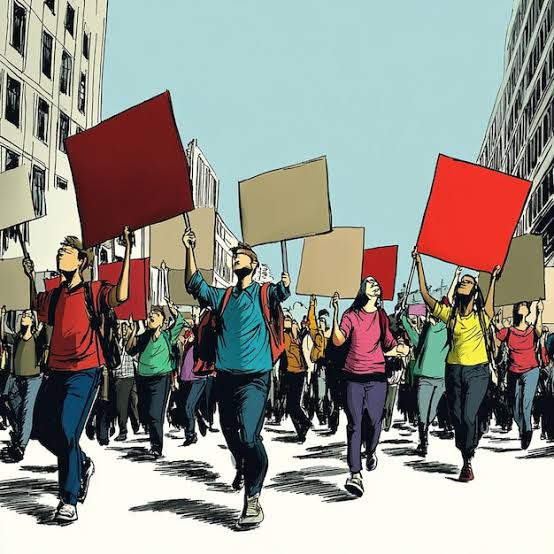
When voices rise, democracy lives
G. Venkat Sai
Fundamental freedoms are the foundation of any democratic society. Among these, the right to speak freely and the right to protest are the most important because they allow citizens to express their opinions and take part in public life. In India, these rights are guaranteed under Article 19 of the Constitution. They give people the freedom to express their thoughts, share ideas, question authority, and assemble peacefully. These freedoms are not just legal rights; they are essential for the proper functioning of democracy. Without them, people would not be able to raise their voices against injustice, and the government would not be fully accountable to the people. These rights ensure that democracy remains active, participatory, and meaningful.
To understand the importance of these freedoms, it is necessary to look at their history. The idea of freedom of speech and protest did not begin recently. In India, these freedoms became strong during the struggle against British rule. Leaders like Mahatma Gandhi encouraged people to speak against injustice and protest peacefully. He believed in non-violence and showed that change could be achieved without using force. Movements such as the Non-Cooperation Movement and the Civil Disobedience Movement brought millions of people together. These movements showed that when people unite and raise their voices, they can challenge even the most powerful rulers. They proved that protest and free expression are powerful tools for change. After independence, these ideas were included in the Constitution to ensure that every citizen would always have these rights. This shows that freedom of speech and protest are deeply rooted in India’s history and democratic values.
The right to freedom of speech and expression allows people to share their thoughts, ideas, and opinions without fear. This is important because it helps people discuss issues, ask questions, and even criticize the government. In a country like India, where there are many cultures, languages, and beliefs, this freedom allows everyone to express their unique views. It also helps in spreading awareness and encouraging debate, which is necessary for a healthy democracy. The right to protest is equally important because it gives people a collective voice. Sometimes, people do not have direct power to change policies or decisions. In such cases, protests become a way to express disagreement and demand change. People protest for many reasons, such as protecting the environment, asking for better laws, and fighting for equality. Many important social changes, including women’s rights and justice for weaker sections, have happened because people spoke up and protested. Without these freedoms, such progress would not have been possible.
In the present time, these freedoms are more important than ever because society is changing quickly. New problems and challenges are coming up, and people need a way to express their opinions and demand solutions. Social media has made this easier by providing a platform where people can share their views and reach a large audience. Today, protests are not limited to streets; they also happen online. Campaigns, hashtags, and digital protests have become common. A major example is the Black Lives Matter protests, which started after the death of George Floyd. Millions of people across the world protested against racism and police brutality. Social media platforms like Twitter and Instagram played a key role in spreading awareness and mobilizing people. This shows that freedom of speech and protest is not decreasing but growing in new forms.
Young people, especially Gen Z, are playing an important role in modern protests. They are using digital tools and social media to organize and participate in movements. The Fridays for Future, inspired by Greta Thunberg, is a good example where students across the world protested for climate action. In India, the Anti-CAA protests saw large participation from students and young people. These movements show how Gen Z combines online activism with street protests to create awareness and demand change. At the same time, local protests are also important. For example, Sonam Wangchuk led protests in Ladakh demanding statehood, environmental protection, and political rights. Similarly, the Dharna Chowk issue in Telangana shows how people protest when they feel their rights are restricted. Restrictions on protests at Dharna Chowk in Hyderabad created debates about the balance between public order and democratic rights.
The psychology of a protestor also helps us understand why people take part in protests. People usually protest when they feel that something is unfair or unjust. According to the Relative Deprivation Theory, individuals protest when they feel they are being treated unfairly compared to others. The Social Identity Theory explains that people act together when they feel connected to a group. Emotions like anger, hope, and moral responsibility also play a big role. When people believe that their actions can bring change, they are more likely to protest. Social media further encourages participation by connecting people and spreading information quickly.
At the same time, there are challenges to these freedoms. Governments often put limits on protests to maintain law and order. These limits are allowed under Article 19, but they should be fair and reasonable. Sometimes, people feel that these restrictions are too strict, which creates fear about losing their rights. Measures such as preventive detention, surveillance, internet shutdowns, and denial of permissions can limit protest activities. Laws like the National Security Act allow authorities to detain individuals without trial. Surveillance systems, including CCTV and digital monitoring, can create fear among citizens and discourage them from protesting. Restrictions in institutions like Osmania University also raise concerns about students’ rights. While maintaining discipline is important, complete restrictions can harm democratic values.
In extreme cases, suppression of protests can lead to serious human rights issues. For example, in Iran, reports show that many people were punished or even executed after protests. Organizations like the United Nations and Amnesty International have strongly criticized such actions. This shows how dangerous it can be when people are not allowed to speak freely. In such situations, technology is used not to empower people but to control them, creating a dystopian environment where citizens are afraid to express their opinions.
However, freedom also comes with responsibility. People should not misuse these rights by spreading hate, false information, or violence. Such actions can harm society and lead to stricter rules. It is important for citizens to use their freedom wisely, respect others’ opinions, and share correct information. Courts, civil society, journalists, and ordinary citizens all play a role in protecting these freedoms. When people raise their voices, they remind the government that these rights cannot be ignored.
In conclusion, the right to speak and the right to protest are essential for a healthy democracy. From the time of Mahatma Gandhi to modern digital movements, these freedoms have helped people bring change and demand justice. Even though there are challenges such as state control, surveillance, and misinformation, these rights continue to exist and evolve. As long as citizens remain aware, responsible, and active, these freedoms will remain strong. A true democracy is one where people can speak freely and protest peacefully, and these fundamental freedoms make that possible.