After MANUU, will Osmania be next?
Muppu Sai Kumar
Why does a government need university land? That is the question that has arisen once again in Telangana — first with University of Hyderabad and now with Maulana Azad National Urdu University.
The state government has its sights on 50 acres of land allotted to Maulana Azad National Urdu University (MANUU). The government, through the Ranga Reddy district administration, has issued a show-cause notice asking the university to explain why 50 acres of its “unutilised” land in Manikonda village, Gandipet mandal, should not be taken back into government custody.
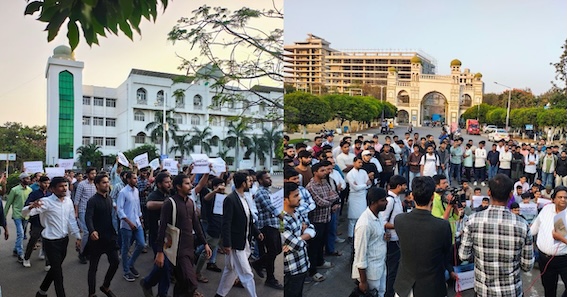
The move has revived memories of earlier land disputes involving major universities in the state.
About a year ago, the government proposed auctioning around 400 acres of land near Gachibowli, adjacent to the University of Hyderabad (UoH), to develop an IT park. The land, considered a vital ecological zone, became the centre of widespread student protests and legal battles, eventually drawing intervention from the Supreme Court. UoH, which was originally allotted around 2,300 acres in 1974, today holds less than 1,600 acres.
Professor Jayashankar Telangana State Agricultural University (PJTSAU) has also faced similar pressure. About 100 acres of its Rajendranagar campus was proposed for acquisition to build a new High Court complex — a move criticised for diverting university land for non-educational purposes.
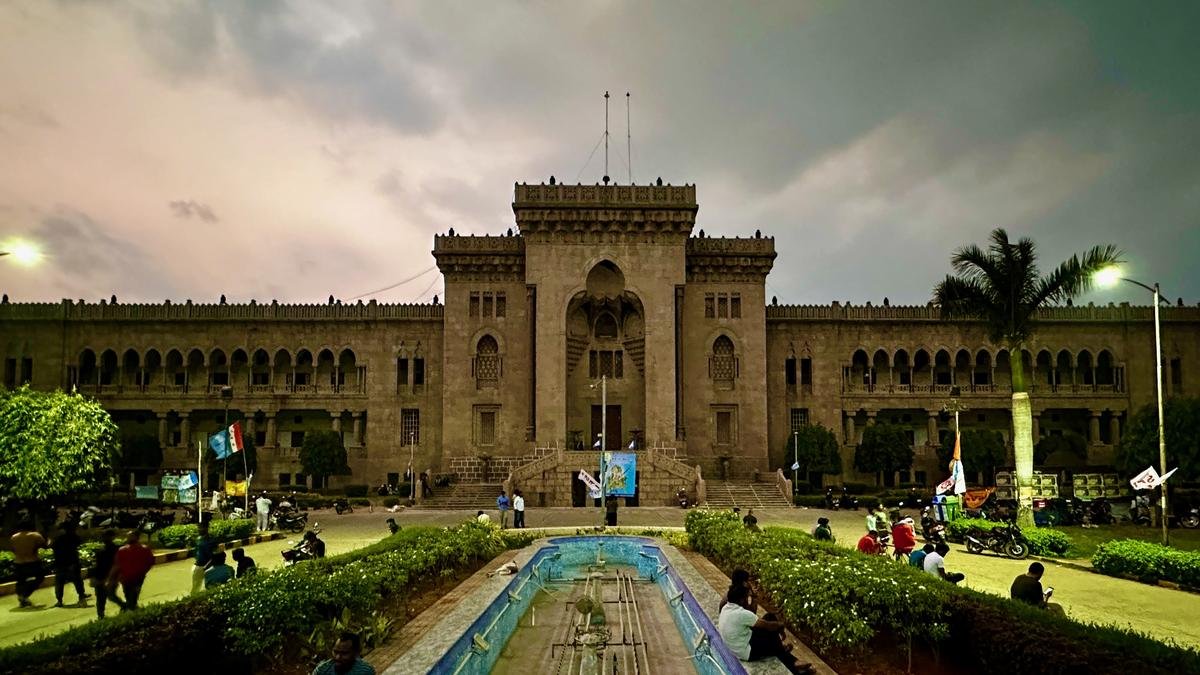
Osmania University presents a longer and more complex story. Established in 1918, it was originally granted about 2,300 acres by the last Nizam of Hyderabad, Mir Osman Ali Khan. Over the decades, nearly 1,400 acres is currently in use, while hundreds of acres have been leased or transferred by successive governments to various central and state institutions, including ICMR centres, biological research facilities and schools often for token rents of ₹1 or ₹99 for long-term leases.
Apart from the RTC hospital, most of these institutions offer little direct or indirect benefit to Osmania students.
Today, the geographical extent of Osmania University is very different from what was originally recorded in official registers. These records must be reviewed and the remaining land must be legally protected.
Given the situation MANUU is facing, the future of Osmania University is a matter of concern. Universities are living institutions. They expand as academic disciplines evolve. If their land is reduced, their future is reduced. We must realise that university land does not belong to governments of the day, but to generations of learners.