Creator journalism is the most disruptive shift: ex-BBC News head
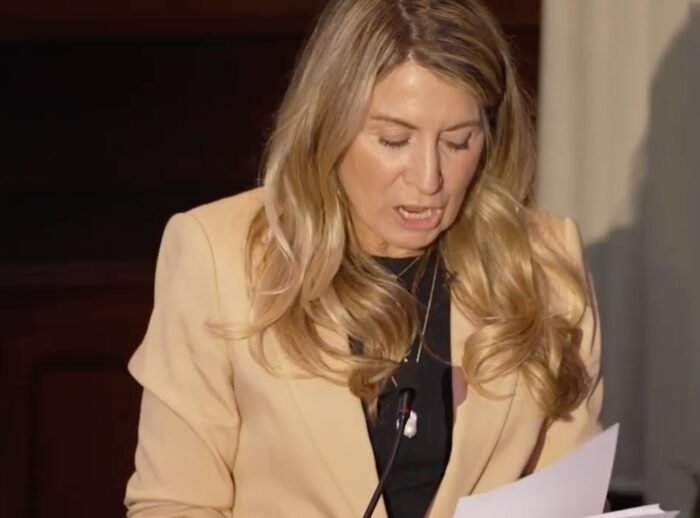
In May 2026, former BBC News CEO Deborah Turness delivered the 2026 Sir David Nicholas Memorial Lecture. Here are some of the points she made:
I believe the impact of this revolution on established news providers may be greater than the advent of the digital age or the arrival of social media, because they were in truth about new platforms, new spaces where high-quality, trusted journalism could still find its place. Essentially, same journalism, different location.
1. This moment of disruption is so potent because it goes to the heart of how the relationship between news provider and news consumer is shifting from institutions to individuals, from big media brands to personalities, from PSBs to independent journalists, all with dramatic consequences for where news consumption is collapsing, and where it’s growing at speed.
We’re all familiar with the decline in TV news audiences, with nearly 4 million fewer people getting their news from TV in the last five years, and that includes streaming. Maybe that decline would be less steep if PSBs and others had an obligation to give news on their streaming platforms more priority and to optimize it. I think that finding news on rail 9 or 11 or 13 of a streaming player is just not good enough. At the same time, we’ve seen a trebling of the number getting their news from YouTube and a 10-fold increase on TikTok.
2. I believe the established media hasn’t confronted the hard truth that this revolution isn’t just about consumers moving to different platforms. It’s that they are choosing more direct forms of journalism in a more fragmented media universe.
We’ve seen an explosion of independent journalism and commentators hosting podcasts, creating their own YouTube channels, and publishing articles on Substack, where they can monetize their work directly, from Piers Morgan Uncensored on YouTube, to Emily Maitlis, Jon Sopel, and Lewis Goodall’s The News Agents podcast. From the hugely successful The Rest Is… brand to Jim Waterson’s fast-growing London Centric on Substack, and in the U.S., from Tina Brown’s Fresh Hell, which I highly recommend, to news brands like Puck or The Ankler.
3. This creator journalism is not a side show. It is fast becoming the show. […] These new forms of journalism are taking the time, the loyalty, and the trust that consumers used to invest in big, mainstream news providers, and they’re moving it to new platforms.
To understand what’s driving this, I spoke to Piers Morgan, who has built a YouTube audience of more than 4 million with Uncensored and is now expanding the brand with History Uncensored and The Royals Uncensored, which launched a couple of weeks ago. He told me that particularly young people are incredibly informed about what’s happening in the world thanks to constant social media updates, but what they really want to know is what they should think about the stories in the news. He claims his viewers perceive him to be authentic and intellectually honest.
4. It’s clear this is not just another technology-enabled stage in a story of media progress. What we’re witnessing is the wholesale shift from one information ecosystem to another, and if we’re honest, one where established news providers have, so far, struggled to authentically play at scale.
5. I would argue this is because this revolution is a rejection of and a reaction against the very broad reach model that the established media is built on. In many ways, it is the antithesis of everything that news media has traditionally stood for.
6. What do I mean by this? Success in the new world is driven by a recognition that consumer trust is now earned through authenticity, through independence, and through opinion. Authentic, with the informality and unpredictability of real conversations. Independent, with the freedom for the presenter to speak their mind. Opinionated, without the need to constantly tread carefully around issues. All creating the sense of a one-to-one experience, a feeling of intimacy and a greater connection, versus the polished, controlled formality that is in the DNA of the established media. And, yes, the impartiality. This is the uncomfortable truth that has been crystallized to me through my conversations over the past few months.
That’s not to say there isn’t brilliant, bold, and fantastic creative work going on across the industry to respond to these new consumer demands. I enjoyed watching Cathy Newman’s innovative new evening program on Sky News last week, which is seeking to crack this exact challenge. CNN has showed a willingness to experiment in this space, too, and found out just how difficult it is. Lead anchor Jake Tapper abandoned his CNN studio to anchor part of his program from his personal office with the backdrop of political memorabilia and large vintage podcast-style mics, an attempt to mimic the more informal YouTube style. It had, at the very best, mixed reviews.
7. This new authenticity is hard, because authenticity has to be authentic, and consumers quickly see through any attempt that feels manufactured or fake. A glance at the Apple or Spotify top 10 podcasts or YouTube’s most popular channels shows us that this space is dominated by independent media, and traditional media have just not yet been able to fully crack the code and break their way in. These new forms of content are driving growth in audiences and in revenues. This is a new gold rush, with private equity investors eager to fund the next big talent and turn their brand into an empire.
The value of the global podcast market alone is projected to grow from $32 billion last year to $114 billion by 2030. $32 billion to $114 billion just by 2030. In this fragmented universe, news and information content across YouTube, podcasts, Substack, newsletters, social media, and more are far bigger in aggregate than any broadcast reach can deliver.
8. I’ve been talking to the founder of Substack, Hamish McKenzie, who is writing a new book called How to Save the Media. He argues that the disruption of established media has happened in three phases.
First, there were the big media institutions that were the juggernauts of the news industry; if you like, the gatekeepers of the channels through which the content flowed, and they controlled the editorial and the advertising revenues.
Then came phase two, the social media platforms, where creators have editorial freedom over their content, but Big Tech are now the gatekeepers of distribution and advertising.
But now, Hamish argues, we’re in the third phase, where Substack and podcasts are a gatekeeper-free world, where creators have ownership of their editorial, of their distribution, and a share of the revenue. A world where individual journalists are paid by individual consumers for their work and can build a viable business of their own.
[…]
9. This new phase of one-to-one direct relationships is becoming well and truly mainstream, accelerating the downward spiral of the one-to-many broadcast model.
This point was made starkly by U.S. media journalist Dylan Byers in a discussion on his Puck podcast. He said that “the long inexorable decline of linear television, particularly television news, that I have been talking about ad nauseam for years, really feels like it’s arrived now.” His guest, a former NBC colleague of mine, Noah Oppenheim, agreed, saying, “The era of broad reach is over. We now inhabit a fractured landscape, where trying to aggregate millions of viewers is not just a fool’s errand, but not worth a ton of time and effort.”
Noah has a point. Days like today tell us when there’s a huge news story, people are still gathering on broadcast platforms. But the overall trajectory is doubtless going down. And it has been for some time.
10. The move away from mass reach and its replacement with a fragmented media landscape is what defines this revolution I’m talking about. It is a long-term, irreversible shift more profound than we have so far understood, and it’s completely reshaping our industry.
This was brought home to me recently when I spoke to Sarah, the nurse who treated me when I found myself in A&E after my hand became embroiled in a fight between a cat and a dog. Sarah asked me about my line of work, and it triggered a fascinating conversation. It turns out she’s a total news junkie, obsessed with politics here and in the U.S. Despite juggling long shifts at the hospital and a five-year-old, she never misses an episode of The Rest Is Politics or The News Agents. She listens to Pod Save America and The Rachel Maddow Show. She’s just downloaded Substack. Not once did she mention a traditional news provider, despite growing up on a typical diet of BBC and ITV content. I asked her why, and her answer was very simple: I trust them. I feel like I know them. I feel like they’re not led into one way of thinking. They have edge.
11. [Sarah] is exactly the kind of person all news organizations want to reach — engaged, curious, committed, but making very different media choices, trusting in a new and very different way. Mainstream media have lost Sarah.
And the reason why this matters transcends the impact on any one organization. It matters because this new media diet is, in the main, driven by commentary and conversation. And because the established media has not yet broken into this new world at scale, it isn’t yet the home of frontline reporting by courageous journalists from dark and dangerous places across the globe, or, with notable exceptions, the home of risky undercover investigations that expose wrongdoing and uncover lies.
I was listening to media podcast The Grill Room last week, where they were asking, “Are creators the new Cronkites?” I believe the answer is very clearly “not yet,” but if the established media want to continue to be the ones to carry forward that legacy, then they must find a way to succeed at scale in this new world. Otherwise, how will consumers access vital journalism in the future? And just as importantly, how will it be funded? Because the advertising revenues are following the consumers onto these new platforms, and it’s those revenues that fund expensive journalism, reporting live from downtown Tehran or the front lines of Ukraine, standing up as the powerful, exposing corruption and taking on vested interests.
It’s not only our duty to follow the consumer, but our necessity to follow the money, because journalism costs, and even if you’re funded by a license fee, the journalism is funded by people being willing to pay it, essentially a subscription model.
12. In a world of dictators and autocrats, state-run propaganda, disinformation, and AI slop, the need for this eyewitness journalism funded and delivered by the established news media is more critical now than ever. Reporters Without Borders revealed last month that for the first time in the 25-year history of the World Press Freedom Index, over half of the world’s population lacks access to free, fair, and fact-based journalism.
13. So the challenge is clear: Will we wake up to the existential nature of this great shift in our industry? Will we respond with the speed, urgency, and purpose required? Or will we be like the proverbial frog in boiling water, who knew it was getting warm, but failed to jump in time?
As Rosa Luxemburg famously said, “Before a revolution happens, it is perceived as impossible; after it happens, it’s seen as having been inevitable.” And this revolution has been coming for a long time, but it’s not too late. I did promise I was going to be an optimist, and I believe there is still time to join it.
I believe the established news media has everything it needs to succeed, the assets required to win in this new world.
First, the talented, experienced journalists who have spent a lifetime carving out a reputation and the consumers who crave connection with them; brands that have meaning for audiences; and a legacy of trust. The irony is lost on no one that many of the biggest names leading this revolution built their profiles inside established media players.
However, my optimism here is conditional on whether the established media is willing to deploy those assets to win and not be left behind.
So tonight, I want to share some conclusions that I’ve reached having listened to those on the front lines of this revolution.
“On every metric…the long-term trend was down”
As I see it, there are three clear priorities. Restore trust; understand what drove the decline and how it can be reversed. Reconnect, through authenticity; come to terms with what it will really take to give consumers the authentic, independent voices they crave. Reinvent the newsroom; create an engine that delivers across this fragmented landscape.
Let me take each of these in turn. First, restoring trust. I believe that to understand why audiences are moving from institutions to individuals, we have to understand the long-term decline in trust in those institutions, a shift accelerated by global events, societal change, and new technologies.
First, restoring trust.
I believe that to understand why audiences are moving from institutions to individuals, we have to understand the long-term decline in trust in those institutions, a shift accelerated by global events, societal change, and new technologies.
Lost trust in the system
Social scientist Alfie Spencer argues that the rupture in trust goes back to the 2008 financial crash, when banks were bailed out but so many ordinary people lost their hard-earned homes and livelihoods and suffered for years. The system failed them, and they felt they’d been lied to. This sense of injustice and powerlessness, of feeling betrayed, impacted in trusting governments, banks, and, yes, the media, too.
Dissatisfaction with the political and social order
Over the following decade, this dissatisfaction with the traditional political and social order translated into the rise of populist movements. It was fuelled by the growing sense that the system no longer works for them, that the routes to get ahead are closed off, that their children are no longer guaranteed a better quality of life than the previous generation, that others are being put ahead of them — exacerbating an us and them mood in society. We saw some of the consequences of that in the rejection of established political parties at last week’s U.K. elections. They continue to play out in the political drama we’re all witnessing today and tonight.
Social media connected like-minded people at a time of polarising events
Meanwhile, social media platforms connected like-minded people and became the home of the growing disinformation industry. Troll armies and clickbait factories flooded the social media landscape with viral lies that fed on the outrage. Add to this highly polarizing events: Brexit, the 2016 U.S. presidential election, and then the 2020 Covid pandemic, all whipping up a perfect storm where dissatisfaction and disinformation could thrive together.
Your truth vs. my truth
As a result, we saw a loss of trust in experts. The idea of agreed facts started to be undone. The concept of truth became replaced by your truth and my truth, all weakening critical parts of our social scaffolding. Trust in news was a casualty, falling, according to [the Reuters Institute for the Study of Journalism], from 51% in 2015 to just 35% last year, a 16-point decline.
