On Day 5 of protests in New Delhi: Protesters climbed over barricades, slogans pierced through the din of police announcements, and detention buses filled up on Wednesday as hundreds of people took to the streets of central Delhi against the special intensive revision (SIR) of electoral rolls and Chief Election Commissioner Gyanesh Kumar. The fifth consecutive day of demonstrations saw separate marches by members of the Youth Congress and those of the Students’ Federation of India and the Democratic Youth Federation of India. The protesters targeted Mr. Kumar and opposed the removal of Jantar Mantar’s status as a designated protest site. The situation escalated as police personnel began detaining protesters who sat on the road, with several being bundled into detention vehicles. Some protesters alleged being beaten up. The number of people detained was not made available at the time of going to press. (TH / 15th Oct.)
The Opposition parties seem to have gained the focal spot after INDIA bloc’s massive march to the Supreme Court on Monday. Leader of the Opposition in the Lok Sabha, Rahul Gandhi hosted politicians, civil society activists, and student leaders for tea on Tuesday and said there were no parallel protests, but only one movement to restore democracy. Mr. Gandhi, who filed a petition in the Supreme Court to halt the SIR, said that political resistance will continue regardless of the court’s response. “They [the judiciary] have a role to play; we hope they will play that role but we are also political people. No matter what happens, no matter which institution plays a role or not, political resistance will continue, people’s resistance will continue, and it will triumph,” he said after the meeting. It was decided at the meeting that though there may be breaks in large-scale protest actions because of the Navratri and Durga Puja festivities, the agitation will continue, with Delhi remaining the main focus. Parties belonging to the Indian National Developmental, Inclusive Alliance (INDIA) will coordinate every day among each other for joint action.
Opposition leaders from 16 parties were present at the tea hosted by Rahul Gandhi. Those present included M.A. Baby (CPI-M), D. Raja and P. Sandosh Kumar (CPI), Tejashwi Yadav and Manoj Jha (RJD), Mahua Maji (JMM), Harender Malik, Anand Bhadauria, and Mohibullah Nadvi (SP), Sanjay Raut (Shiv Sena-UBT), Sagarika Ghose and Mahua Moitra (Mamata Trinamool Congress), G. Deverajan (Foward Bloc), and Dipankar Bhattacharya (CPI-ML)L. All India Students’ Association (AISA) chief Neha Bora and advocate Prashant Bhushan also attended the tea party at Mr. Gandhi’s No. 5 Sunehri Bagh Road residence. Top Congress leaders, including party chief Mallikarjun Kharge, Sonia Gandhi, Priyanka Gandhi Vadra, and K.C. Venugopal, were also present to discuss the future course of the agitation. Leaders of the Cockroach Janta Party (CJP) were not present at the meeting. Mr. Gandhi’s office had reportedly tried reaching out to them through an intermediary, but it did not work out. The CJP had been among the groups that issued a call for Saturday’s protest, triggering a harsh police crackdown. (14th Oct.)
Despite heavy security clampdown, transport restrictions, and an Internet shutdown, protesters on Saturday managed to reach locations near Jantar Mantar in central Delhi to demand the exit of Chief Election Commissioner (CEC) Gyanesh Kumar over alleged electoral irregularities. Nearly 2,500 protesters were detained across the capital during the day, indicating a high turnout despite the absence of prominent Cockroach Janta Party (CJP) leaders on the ground. These were in addition to around 1,000 people picked up in preventive operations across Delhi overnight ahead of the protest. A few journalists and several lawyers were also detained. The youth-led protest, called by Left groups, the CJP, and civil society groups, kept the police and security forces on their toes as police forcibly removed protesters, put them in buses, and took them to large halls and stadiums on the outskirts of Delhi that had been converted into detention centres.
The protests against Chief Election Commissioner Gyanesh Kumar will not stop until he resigns over alleged vote chori (theft), Leader of the Opposition in the Lok Sabha Rahul Gandhi said on Wednesday, 7th October, after the Delhi Police detained him and other Opposition leaders for the second day in a row while they were on their way to Jantar Mantar for a dharna. Mr. Gandhi, who has stressed a “politics of resistance”, his sister Priyanka Gandhi Vadra, and other Opposition leaders staged an impromptu dharna at a roundabout barely a couple of hundred metres from Jantar Mantar, a designated protest site in central Delhi. Samajwadi Party (SP) members, however, were conspicuous by their absence. Several other Opposition MPs, including CPI(M)’s John Brittas, CPI’s P. Sandosh Kumar, Rashtriya Janata Dal’s Manoj Jha, and Trinamool Congress’s Derek O’Brien and Mahua Moitra, were part of the protests. (8th Oct.)
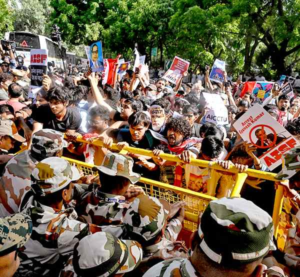
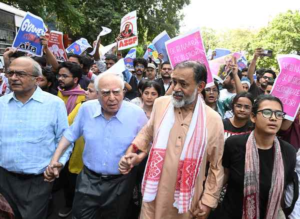
Opposition leaders, civil society activists, and youth organisations continued their protests in the national capital on 3rd October, seeking the removal of Chief Election Commissioner (CEC) Gyanesh Kumar and suspension of the special intensive revision of electoral rolls. The Delhi Police reportedly detained around 150 protesters, including All India Students’ Association (AISA) leader Neha Bora, activists Yogendra Yadav and Anjali Bharadwaj, and advocate Prashant Bhushan, as they marched towards Jantar Mantar to demand the removal of the CEC. Rahul Gandhi, Leader of the Opposition in the Lok Sabha, launched the ‘Satyagraha’ digital platform to map resistance movements across the country. Congress president Mallikarjun Kharge escalated the face-off with the Narendra Modi government over the sanctity of the electoral process, demanding the dissolution of the Lok Sabha and State Assemblies, saying that “all the elections were illegal”.
October 2nd turned out to be much more than a ritualistic Gandhi Jayanti marked by some grand figures. In Mumbai, protesters numbering between 4,000 and 5,000 demonstrated outside Mumbai’s Shivaji Park against alleged irregularities on electoral rolls and the Election Commission’s special intensive revision (SIR). Though police permission was not granted for the protest, the demonstrators made a vocal demand for the resignation of Chief Election Commissioner Gyanesh Kumar. CJP conveners Abhijeet Dipke, Ashutosh Ranka, Saurav Das, and its head of legal affairs, Ratna Singh, addressed the protesters raising slogans such as “Gyanesh, it’s done, bro”. In Delhi, voters whose names were deleted from the electoral roll were among the hundreds who took to the streets to protest the special intensive revision (SIR). They demanded that the exercise be scrapped and accountability fixed. Students and activists attempting to march to Jantar Mantar were detained at multiple points in central Delhi as the police barricaded most roads leading to the protest site. Several protesters who managed to get out of police buses were detained again as they tried to continue the demonstration. For many voters unable to reach the heavily barricaded Jantar Mantar protest site, the protest was about having to prove their eligibility to vote repeatedly.
All the glare of public attention on SIR has not stopped bulk filing of Form 7 for deletion of voters in Karnataka. Chief Minister D.K. Shivakumar alleged that “pre-filled” Form 7s were being filed in bulk across the State by the Opposition BJP and Janata Dal (Secular) workers. The deletion applications were mainly targeting Muslims, and members of the Scheduled Castes, Scheduled Tribes, and Other Backward Classes, claiming they had either “shifted” or were “absent”. He said many Form 7s were either false or forged. In at least two instances, in Belagavi and Vijayapura, BJP workers who filed Form 7s in bulk withdrew those after being warned of punitive action if the claims were found to be false. In a written declaration, they said they had made a mistake. The Karnataka Police registered five FIRs on Thursday over bulk Form 7s invoking the Bharatiya Nyay Sanhita, 2023, and not the Representation of the People Act, 1951, as only EC officials can lodge complaints under the latter. Mr. Shivakumar demanded that poll body must take suo motu action and lodge criminal complaints.
In Telangana, a case of alleged “pre-printed” deletion forms has been reported from the state capital. The pre-printed forms were reportedly submitted by a booth-level agent (BLA) of the Bharatiya Janata Party (BJP) from Musheerabad for deletion of the names of Congress’s BLA and over 30 members of his family. The names of all the family members along with the address were pre-printed on the forms, with only the name of the applicant hand-written, raising suspicions about a large-scale political conspiracy. TPCC has raised serious concerns about pre-printed application forms being prepared and circulated on a wider scale targeting Congress leaders and their supporters, and expressed suspicion that BLAs may have got the material through party channels.
What is to be done next on the SIR issue is the immediate question before the opposition. At the INDIA bloc meeting on Wednesday (30th Sep.) former Law Minister Kapil Sibal suggested challenging the 2023 law that gives the CEC and the two Commissioners immunity from criminal and civil proceedings. A certain provision in the amended 2023 law means no court can entertain proceedings against them for an act done in the discharge of their duty. However at the Congress Working Committee (CWC) meeting, senior advocate Abhishek Singhvi argued that court appeals often delayed matters. If a legal challenge by the Opposition was not upheld by the higher courts, the issue would not only appear as a setback but also legitimise the law, Mr. Singhvi reportedly argued. Mr. Singhvi suggested that non-political actors could help mobilise public support, and cited the Cockroach Janta Party-led anti-paper leak protests as an example. He said the protests were effective in mobilising people and had also forced Dharmendra Pradhan to resign as the Education Minister. However, Priyanka Gandhi Vadra and Anand Sharma argued the Congress should take the lead, with other parties and movements joining it. Another CWC member, Manish Tewari, said the Congress should mobilise every party workers and call them to Delhi to sit on an indefinite dharna, much like what the Punjab farmers did during their opposition to the three farm laws. Several Congress leaders argued that the party now needed to move beyond courtroom technicalities and work with people who had lost their right to vote, turning the issue into a people’s movement. (1st Oct.)
The Congress Working Committee (CWC), which met on 29th September, described SIR as an exercise of doubtful constitutional validity and resolved to fight for a restoration of universal adult franchise, calling it a struggle no less than the freedom struggle itself. The opposition party’s core decision-making body also demanded Mr. Narendra Modi’s resignation, the removal of the CEC, an immediate suspension of the special intensive revision (SIR) of electoral rolls, and the restoration of 13.3 crore names deleted through the exercise. “This brazen vote chori has been organised by the CEC on behalf of the Prime Minister and the Home Minister. Nothing short of their resignation will ensure the safety of our Constitution and hard-earned democracy,” the resolution said. “For the Indian National Congress, the struggle to restore universal adult franchise in India is no less than the Freedom Struggle itself,” it said. (30 Sep.)
Swiss voters have rejected a proposal to impose strict new limits on the country’s centuries-old neutrality, deciding in a referendum to maintain their existing approach to sanctions and security co-operation with other European countries. The initiative would have enshrined “perpetual and armed” neutrality in the constitution and restricted the government’s freedom to decide what neutrality means in practice. It would have barred the country from co-operating with military alliances unless it faced an attack or one was being prepared, and would be prevented from imposing sanctions unless they were approved by the UN. The result leaves Switzerland with room to adapt its neutrality policy as Europe confronts a more uncertain security environment. But the campaign revived the debate over what Swiss neutrality means — and the considerable flexibility with which the country has historically applied it.
The revelations of irregularities in the Election Commission has led to fresh protests demanding the resignation of Chief Election Commissioner (CEC) Gyanesh Kumar. The opposition Congress accused Kumar of compromising the integrity of India’s electoral process, and sought his resignation and arrest for alleged electoral malpractice. At Jantar Mantar in the national capital, a new campaign has sprung up, drawing participation from civil society activists and organisations. The All India Students’ Association (AISA), along with civil society members, organised a protest demanding the arrest of Mr. Kumar. CPI(ML) Liberation general secretary Dipankar Bhattacharya, AISA president Neha Bora, activist Yogendra Yadav, lawyer Prashant Bhushan, RJD MP Manoj Jha, activists Anjali Bhardwaj and Nandita Narain were among those who participated. (26 Sep. 2026)
Thursday, 24 September
The Opposition parties pressed for resignation of Chief Election Commissioner Gyanesh Kumar following revelations by the Indian Express of several instances of unilateral decision-making in the three-member body contrary to the established rule of unanimity or majority vote. Leader of the Opposition in the Lok Sabha Rahul Gandhi described it “vote chori” (vote theft), a crime against Indian people and the Constitution and an act of treason. Congress president and Rajya Sabha Opposition leader Mallikarjun Kharge pointed out that a notice under Article 324(5) of the Constitution seeking Kumar’s impeachment was still pending five months after its submission in Parliament. He added: “Today, the question is not just about Vote Chori. The question is about the government’s takeover of India’s democracy and its institutions. It is about their independence and impartiality.” Another Congress MP Abhishek Manu Singhvi said, “We demand that all these objections be placed before the House — forget Parliament, forget the EC — right on the floor of the House. The nation must know, and do not tell us to resort to RTI (Right to Information Act), because we know we will only hit a stone wall there…. Dissent is not disruption. Dissent is the protection of democracy.” DMK leader and former Tamil Nadu chief minister M.K. Stalin said on X: “As early as March this year, the DMK, along with other Opposition parties, moved an impeachment motion against Chief Election Commissioner Gyanesh Kumar. He has no right to continue in office any longer. Thiru. #GyaneshKumarMustGo immediately. The SIR exercise must be halted. The DMK demands a fair and thorough investigation into everything that has transpired within the Election Commission and that those responsible be held accountable.”
Former Election Commissioners have called for a disclosure of all decisions and how they were arrived at. S.Y. Quraishi said all decisions are illegal if they are not unanimous or backed by the majority. Former Election Commissioner Ashok Lavasa said the EC should disclose all details, including the dates on which the notes or letters were given and what action was taken on them. “If two commissioners are saying that they were not involved, then the only way to refute this is to show a record that they were present in the Commission meeting in which these decisions were taken,” he said. Another former CEC, O.P. Rawat, said it would have been better had the two ECs not waited for 10 months. “The Election Commission provides complete independence, and if you feel that something wrong is taking place, you can immediately go public,” he said. The EC responded on Wednesday, saying that all its actions have been in accordance with the relevant laws. Highlighting specific internal notes spread over a 10-month period while overlooking the larger body of approvals, instructions, and initiatives gives only “one part of the picture”, it said.
Wednesday, 23 September
The Supreme Court, on 22 September, clarified the principle that while a democratically elected government may give shape to the scope and length of the National Song, it cannot violate individual and collective religious freedoms or subject conscientious objectors, who refuse to sing one or all the stanzas of the Vande Mataram, to penal consequences. It made this observation while hearing a challenge to the Prevention of Insults to National Honour (Amendment) Act, 2026, read with the administrative directions issued by the Union Home Ministry in January and a subsequent circular in July. The petition was filed by Carnatic musician T.M. Krishna. The court said that the 1986 Supreme Court precedent in Bijoe Emmanuel versus State of Kerala, upholding the right to religious freedom, constitutional tolerance, and silent objection, still holds true. The Court issued notice to the Union government.
Tuesday, 22 September
The land and assets held by former chief minister K Chandrasekhar Rao and his family members continued to be in the spotlight. On Monday (21 Sep.) Ramya Rao, an office bearer of Telangana Pradesh Congress Committee (TPCC), questioned K.T. Rama Rao’s recent claims that hundreds of acres were held by his family from his grandfather’s time. She asked: “We both are the grandchildren of Mr. Raghava Rao (Chandrasekhar Rao’s father). If the family had hundreds of acres, where is our share?”. Ramya Rao is the daughter of Chandrasekhar Rao’s elder brother. She also asked how former MP J. Santosh Kumar acquired properties in Markook, Banjara Hills, Kondapur and Nanakramguda and some more properties in other parts of the country and in Australia. “Why is Mr. Rama Rao silent on these assets. Is he fearing someone,” she asked. She alleged that Mr. Chandrasekhar Rao’s daughter Ms. Kavitha and herself had been kept away from the family while Mr. Santosh Kumar continued to remain close to Mr. Chandrasekhar Rao.
The Indian Institute of Technology Bombay has removed Suryanarayana Doolla from the post of Dean (Administrative Affairs) and issued an apology for statements made in its earlier communication regarding Wakode’s death. The decision to remove Prof. Doolla was conveyed to students in an email by IIT-Bombay Director Shireesh Kedare. The suspension was among 18 demands submitted by the protesting students to the institute administration on Sunday. Professor Kedare signed the charter and assured students that the institute would work towards fulfilling their demands.
Sunday, 20th September
In the United States, Democratic Party leaders are reportedly very keen to investigate and build a case against Trump’s “crimes” and “impeachable offences”, if the upcoming mid-term polls give them the strength to set the agenda. In an interview to the Financial Times newspaper, Robert Garcia, the seniormost Democrat on the House Oversight Committee, said he would do his best to call Trump family members and Elon Musk to testify on oath on corruption allegations. “The scale and the scope of it is so outrageous,” Garcia said of alleged corruption in the Trump family and administration. He said he had several questions for Donald Trump Jr, including how some companies his firm invested in received multimillion-dollar contracts with the Pentagon and why a Russian businessman spent hundreds of thousands of dollars on his wedding celebrations in the Bahamas. The same newspaper last year revealed the Trump family had made at least $1bn through a variety of cryptocurrency ventures. Corporate donors from the crypto and tech sectors have developed close ties to the first family and been granted access to the president, with some receiving legal relief or pardons, winning government contracts or benefiting from policy changes. The FT last year reported that Trump Jr’s 1789 Capital invested in rare earths start-up Vulcan Elements shortly before it received a $620mn loan from the Pentagon. Another company he backed, drone group Unusual Machines, received a military contract.
IIM Jammu is facing questions from opposition parties for imposing a penalty of Rs. 500 on students who did not attend a lamp lighting ceremony on Prime Minister Narendra Modi’s birthday on 17th September. “You are hereby required to provide a written explanation stating the reason for your absence from the event. Please note that an exemption from the absence will be considered only on medical grounds, and the same must be supported by an official written note from Sanjeevni specifically recommending bed rest for the concerned period,” the Institute’s notice to students said. Congress MP and party in-charge of J&K Syed Naseer Hussain questioned why attendance at PM Modi’s birthday celebration be mandatory for students. In a post on social media platform X, he asked: “ Is this an academic responsibility at an IIM, or has PM Modi’s publicity been brought onto the campus as a compulsory exercise?” (20th September)
A day after death by suicide of a student at IIT Mumbai, police have registered a case against Satyanarayana Dulla, a faculty member, based on a complaint by the father of Sahil Wakode, the deceased student, alleging caste abuse and abetment to suicide. “When Sahil was studying in the second year, when I met him, he said that for the last three months, on the instructions of Director Shri Shireesh B. Kedare, faculty member Suryanarayan Dulla had been abusing him using caste terms. Mr. Dulla told him that he was from a ‘lower caste and he [Mr. Dulla] can harass him and implicate him in any false case.’ After that, I gave him mental support,” Mr. Chakradhar, the student’s father, said in the FIR. In a statement earlier, IIT Bombay said Sahil had uploaded the third semester examination question paper on ChatGPT to seek answers. Going by the statement of a student who was also present in the same building during the examination, Mr. Dulla caught Sahil and allegedly threatened debarment. Mr. Dulla also told him to attend a meeting the next day regarding the incident, the student said. Sahil left the examination hall immediately and was later found dead in his room in hostel number 4 on the campus.
Saturday, 19 September
Khairatabad MLA Danam Nagender has been disqualified as MLA by the Telangana high court for having contested as a Congress candidate for Secunderabad Lok Sabha seat while remaining a BRS MLA. The court said the Khairatabad Assembly constituency is to be considered vacant from 23 April 2024, and cited paragraph 2 (1) (a) of the 10th Schedule and Article 191(2) of the Constitution in support of its decision. Referring to the Speaker’s observation that the act of contesting Lok Sabha election on a different party’s ticket while being an MLA of a specific party was not constitutionally prohibited, the court said it was perverse in the eye of law. When the MLA admitted all the material facts, the Speaker could not take any other view except that MLA had defected from BRS party, the bench said. In addition to Mr. Nagender, nine other BRS MLAs switched loyalty to Congress during March-August 2024. They included Kadiyam Srihari (Station Khanpur), Pocharam Srinivas Reddy (Banswada), Tellam Venkat Rao (Bhadrachalam), M. Sanjay Kumar (Jagtial), Arekapudi Gandhi (Serilingampally), T. Prakash Goud (Rajendranagar), B. Krishna Mohan Reddy (Gadwal), Kale Yadaiah (Chevella) and Gudem Mahipal Reddy (Patancheru). The BRS party filed writ petitions in the High Court against nine out of the 10 MLAs. For some reasons, the party did not file a plea against MLA Mahipal Reddy of Patancheru. (19 September)
Former West Bengal chief minister Mamata Banerjee has disputed allocation of a new symbol for Trinamool Congress by the Election Commission for the upcoming by-elections to Nandigram and Rejinagar constituencies. In a petition filed before the Supreme Court, Ms. Banerjee contended that the EC had banked on the statements of rebel legislators, and did not comprehensively consider the party structure.
Friday, 18 September
Sharpening questions around the extent of land held by former chief minister K. Chandrasekhar Rao, Revenue Minister P. Srinivasa Reddy pointed to zero land holdings recorded in the former’s election affidavit that he filed with his nomination papers for Karimnagar Lok Sabha seat in 2004. Citing the archived affidavit available on the Association for Democratic Reforms’ MyNeta platform, Mr. Reddy stated in a social media post that “Nil” was recorded against both agricultural and non-agricultural land held by Mr. Rao. The affidavit only listed a building in Banjara Hills valued at ₹70 lakh as his immovable asset, the post claimed. Stating that BRS working president KT Rama Rao had declared ownership of only one acre of land in his 2009 affidavit, Mr. Reddy questioned how his land holdings had subsequently expanded to hundreds of acres. (18 September)
“Introduction of MDR on select high-value transactions will provide a self-sustaining revenue model to smaller companies to compete for higher share in the UPI ecosystem,” the Department of Financial Services said in a statement. It denied the MDR measure had anything to do with US interests. It said that the allegations of U.S. pressure were based on a report by the U.S. Trade Representative (USTR), which cited the difficulties faced by American electronic payment services companies in participating in the UPI ecosystem, including credit transactions on UPI, on a level playing field with RuPay. On this, the DFS said, the revised MDR policy does not change anything. Similarly, the USTR report raised the issue of an NPCI rule mandating a maximum market share of 30% for third-party apps as a potential hindrance. Here too, the department said that while the rule was put in place, enforcement was not possible due to market conditions. India’s UPI market is dominated by two American companies, with Walmart-owned PhonePe holding a market share of about 46% and Google Pay with 32% in the total volume of UPI transactions conducted in the country. (18 September)
Wednesday, 16th September
Union Minister of State for Home Affairs, Bandi Sanjay Kumar, alleged that the ruling Congress and the main opposition BRS were not officially celebrating Hyderabad Liberation Day out of the fear of the Majlis party. He accused the two parties of failing to acknowledge the sacrifices made during the Telangana Liberation Struggle. He urged people to participate in the Hyderabad Liberation Day celebrations to be organised by the Union government on September 17.
Tuesday, 15th September

The government’s announcement of charges on UPI payments worth more than Rs. 2,000 made to merchants has been criticised as bowing to American pressure. Leader of the opposition in the Lok Sabha, Rahul Gandhi, said American payment companies [such as Visa and MasterCard] had long been opposed to India’s free (i.e., zero-MDR) UPI digital payment technology. The party warned this could be a beginning and soon person-to-person transactions could be charged too.
Monday, 14 September
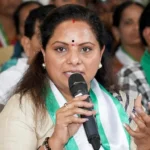
Telangana Rakshana Sena chief Kalvakuntla Kavitha accused Chief Minister A. Revanth Reddy and Revenue minister Ponguleti Srinivas Reddy of “secretly colluding with” BRS MLA Harish Rao. She claimed the government was ignoring the illegal transfer of 100 acres of land listed under the prohibited category (22A) in Siddipet into the names of Mr. Harish Rao’s father and other family members. She challenged the Chief Minister to order an enquiry and take action against Mr. Harish Rao, adding that she was willing to hand over all the clear evidence.

The all-vegetarian food served at the gala dinner for BRICS dignitaries was the flagged by the opposition Congress as an imposition of the dietary preferences of the BJP. In social media posts, the party leaders said 80% of Indians were non-vegetarian and that the country was home to some of the finest non-vegetarian delicacies. The menu at BRICS dinner reportedly offered Khandvi mille (a feuille steamed gram-flour roll), and ‘khumb galouti’ (pan-grilled mushroom kebabs with mint pearls) as starters. The main course offered ‘paneer lababdar’, ‘gucchi marmik’ and ‘carrot bean poriyal’, light lentil broth, millet pulao, beetroot raita and assorted Indian breads. For the desserts, it had ‘Old Delhi fruit cream with jalebi’ and ‘shahtoot phirni’.

National BC Dal has expressed concern that some Backward Class communities are at risk of losing community identity in official records if the Census ignores the regional variation in nomenclature. “If one community is scattered across the census under a hundred different names, what may be lost is not merely a number, but the community’s collective identity in the official record,” said Dundra Kumaraswamy, president, National BC Dal. He called for a transparent and technically robust framework to address regional variations, sub-caste identities and linguistic differences, with clear standards for classification and aggregation.