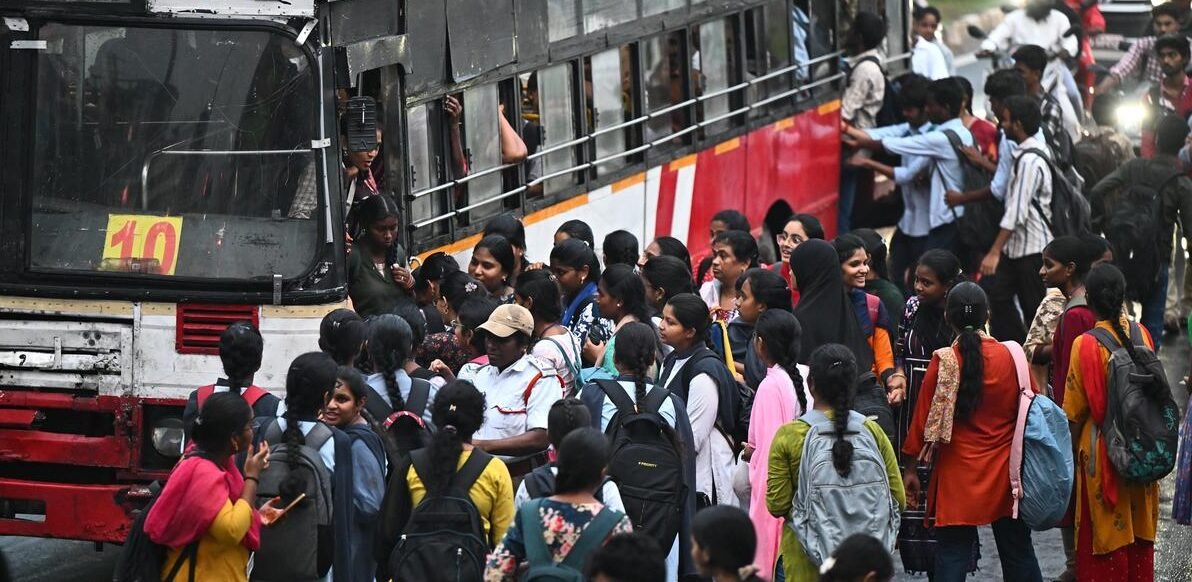
Free and fierce: RTC bus is a daily survival challenge for women
“I stood here, and I need to sit here.”
“Excuse me! I was here before you, and I will be sitting here.”
“So did you book it in your name ?”
Two women were arguing for a seat in a public bus. They were so much in anger, I thought they would get into a fight if the conductor hadn’t stopped them on time.
This is not a one-time incident. Such incidents have become an everyday feature in the TSRTC buses, particularly in the women’s section.
I have seen a few videos on Instagram of women exchanging harsh words, pulling each other’s hair and even getting into physical fights over seats.
Getting a seat in a public bus requires more than a ticket. It requires strategy, patience, speed and exceptional debating skills.
Buses are overcrowded with college students, school children and office goers and daily wage workers. The rush is overwhelming in the mornings and even worse in the evenings.
There are numerous people waiting at the bus stops. Passengers are not given enough time to board the bus. The drivers seem to be in a bigger hurry than the passengers.
“Why don’t you get in faster, how long should the bus wait for you?” they shout.
Finding space inside the bus is the next challenge. There is hardly enough space to stand.
It is filled with heavy bags, crowded aisles and exhausted people.
People seem more concerned about finding a seat than reaching their destination. The seats reserved for the disabled and senior citizens are occupied by people who may not necessarily need them. Those who genuinely need them are left standing unless they ask.
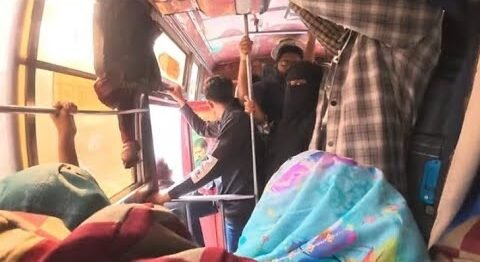
Behind all this chaos, there is a much more serious concern: public safety.
Incidents involving people falling while boarding or getting off the buses are reported regularly. Recently a woman reportedly lost her life while she was boarding a bus amid heavy rush.
Women’s safety inside the bus is another major concern. Overcrowding can make women particularly vulnerable to harassment and uncomfortable situations. When a woman raises a concern, the conductor asks her “why are you complaining when you are travelling for free?”
But when did women ask for free bus travel?
The free bus travel scheme in Telangana was introduced to make public transport more accessible to women, and not to make them feel that they have lost the right to question poor services because they are not paying for the ticket.
Many women might be willing to pay for their tickets if it meant travelling in better managed buses.
The government and transport authorities need to look beyond the number of free tickets issued. More buses during peak hours, better crowd management, responsible driving, enforcement of reserved seating and effective complaint mechanisms are necessities, not luxuries.
Public transport should make people’s lives easier but not turn into a daily survival challenge.
Is free bus travel worth more than women’s safety?