Copycat crimes: When the plot becomes the plan
Crime reports are a staple item in the news irrespective of the medium. Ever wondered if a crime story could become more than just news, and turn into a blueprint for another crime?
You might recall the 2022 Shraddha Walkar murder case, which received intense media coverage and shocked the country with its disturbing details. During the investigation of that case, police reportedly found that the accused, Aftab Poonawala, had drawn inspiration from the American crime series, ‘Dexter’.
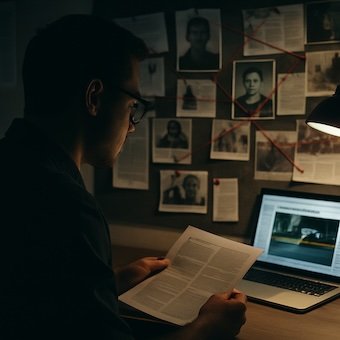
The case raises serious concerns about whether repeated and sensational coverage of crime can unintentionally influence vulnerable individuals. It’s the phenomenon of ‘copycat crimes’— crimes that imitate or draw inspiration from previously publicised real-life crimes, fictional portrayals, or notorious offenders.
Have there been any recent cases of copycat crime?
Yes. There are at least five such cases in the last one year.
Take the Delhi murder case – 2026. According to The Times of India, a 53-year-old Delhi man was accused of killing his wife and attempting to make the death appear to be a suicide. Police reportedly alleged that he drew inspiration from the 2018 true-crime series The Staircase. Investigators linked the staging of the scene and attempt to mislead investigators to something he had seen in a crime narrative.
In 2025 in Udaipur, Ramesh Lohar was accused of murdering 70-year-old Chandi Bai while attempting to steal her jewellery. Police said he was influenced by Drishyam and regularly watched crime programmes such as Crime Patrol. Investigators reportedly found search history relating to the film and crime investigation, and police said he believed that concealing evidence would help him avoid detection.
Auraiya/Kanpur murder – 2025
A man named Ramji Tiwari allegedly conspired with his friend Rishabh Shukla to murder his father, Kamalapati Tiwari. Police reportedly said that Ramji had been influenced by Drishyam and Crime Patrol. The investigation linked the case to a property-related motive, while the media influence was reportedly connected to attempts to conceal the crime and mislead investigators.
In the Jamdi forest murder case in Chhatrapati Sambhajinagar, police arrested a mother and her 19-year-old son in connection with the death of a man. The Times of India reported that investigators linked their planning to exposure to crime-based television and OTT content, including Crime Patrol, CID and Drishyam. Police said the investigation took eight days and involved technical analysis and local inquiries.
One can go on…
Ok, sometimes things happen…??
No. The above cases raise important questions about the relationship between media and copycat crime. How should crime news balance realism with responsibility? How much detail should the media reveal? Should crime shows avoid depicting criminal methods in detail? What other factors create a propensity for copycat crime, and is the media really to blame?
What is the earliest academic observation on this?

French sociologist and criminologist Gabriel Tarde was an early theorist of imitation and crime. Ray Surette’s book Copycat Crime and Copycat Criminals quotes Tarde: “Infectious epidemics spread with the air or the wind; epidemics of crime follow the line of the telegraph.” This is a powerful historical quote because Tarde was describing the possibility of crime spreading through communication networks long before today’s internet and social media.
What are the causes and explanatory factors behind Copycat Crimes?
According to the article “Copycat Crimes: Exploring the Intersection of Violent Media, Technology, and Digital Culture on Criminal Behaviour” (Springer 2025), copycat crimes are influenced by a combination of media exposure, psychological factors, social conditions and digital accessibility, rather than by media alone.
The key is imitation, where individuals observe criminal behaviour through news reports, films, television or social media and reproduce certain elements. Observational learning can make previously seen behaviour appear familiar or achievable. Extensive and sensational media coverage may also create fame, attention or notoriety, which can motivate individuals who seek recognition or shock value.
Other factors include identification with criminals or fictional characters, fascination with crime, social isolation, peer influence, personal grievances, impulsivity and pre-existing antisocial attitudes. Age, emotional development, previous criminal behaviour and individual psychological vulnerabilities may further affect susceptibility. The blur between fiction and reality can also make fictional portrayals appear realistic to some viewers.
Digital platforms intensify these influences because crime-related content can be accessed, shared and repeatedly viewed within seconds. Algorithms and viral content may increase repeated exposure to sensational stories.
However, media exposure is not a direct or universal cause of copycat crime. People exposed to the same content respond differently depending on their personal and social circumstances. Therefore, copycat crime is best understood as the result of media influence interacting with individual vulnerabilities and wider social-environmental factors.
What can be done to eliminate, or at least, reduce copycat crimes?
Preventing copycat crime requires more than simply blaming films, television or social media. Research suggests that media can act as a catalyst or model, particularly when it interacts with existing psychological, social and environmental vulnerabilities.
A 2025 Springer review specifically calls for responsible media practices and criminal-justice policies because digital culture makes information about high-profile crimes rapidly accessible.
Responsible crime reporting
News organisations should inform the public without turning offenders into celebrities. Reports should avoid unnecessary sensationalism, excessive repetition, dramatic headlines and unnecessary details about how a crime was carried out. This is especially important when reporting highly publicised crimes.
Avoid giving a “script”
Journalists should focus on the facts, investigation, legal proceedings, victims and wider social context, rather than repeatedly explaining the mechanics of the offence. Research on copycat crime suggests that media influence may affect the technique of crime, even when it does not create the original motivation.
Reduce glorification of offenders
Criminals should not be presented as celebrities, anti-heroes or fascinating personalities. Excessive attention can potentially create an incentive for individuals seeking recognition or notoriety.
Responsible filmmaking and OTT content
Crime films and series do not necessarily need to avoid crime altogether. Instead, creators can distinguish clearly between fiction and reality, avoid romanticising criminal behaviour and give appropriate context about its consequences. The WHO’s guidance for screen creators demonstrates that entertainment portrayals can be designed to reduce potential imitation effects.
Strengthen media literacy
Young audiences should be taught to distinguish between fictional storytelling and real-world criminal behaviour. Media-literacy education can help viewers critically evaluate sensational content rather than automatically accepting what they see as realistic or achievable.
Responsible social-media platforms
Digital platforms should respond to content that sensationalises or glorifies serious crimes and should discourage algorithms from repeatedly amplifying harmful or sensational material. The WHO similarly recommends cooperation with social-media companies and stronger protocols for harmful content in the context of imitation risks.
Early identification of vulnerable individuals
Copycat crime cannot be explained by media exposure alone. Research has identified relationships between copycat behaviour and certain media- and peer-related attitudes among serious juvenile offenders. Therefore, prevention should also involve family support, schools, counselling and appropriate mental-health and social interventions rather than focusing exclusively on censorship.
Better research and monitoring
Copycat crime remains difficult to measure. Ray Surette’s research notes that there is still uncertainty about its prevalence and the exact relationship between media exposure and offending. Governments, researchers and media organisations should therefore collect systematic data on suspected copycat incidents rather than relying only on sensational individual cases.
Media guidelines and accountability
News organisations can establish internal guidelines, train journalists and editors, and periodically review crime coverage. WHO’s experience with responsible-reporting guidelines shows that training, monitoring and organisational policies can be used to improve media practices.